Static vs Dynamic Website: Which Does a Small Business Need?
By Nishant · · 7 min read
When you ask a developer for a website quote, one of the first questions is whether you need a static or a dynamic site. The answer changes the price, the hosting you need and how much maintenance you will do every year. Most small businesses are pushed towards a dynamic site they do not need. This guide explains the difference in plain words, so you can choose based on what your business actually does online.
The short answer
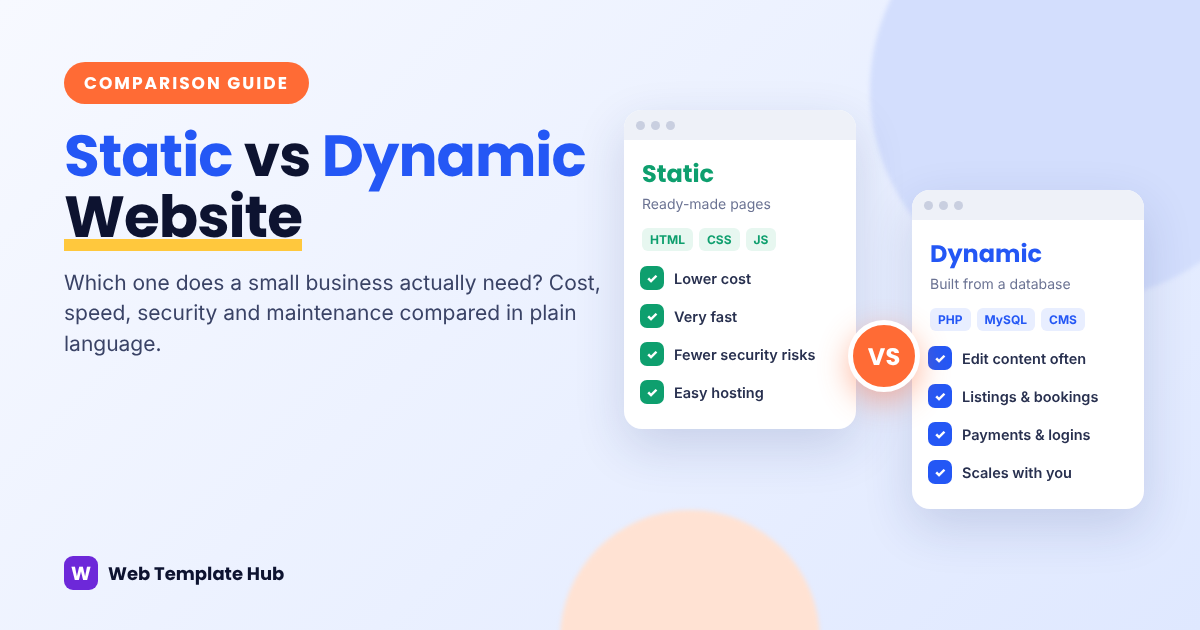
If your website's job is to explain your services, show photos and get calls, WhatsApp messages and enquiries, a static website is usually enough, and it is cheaper, faster and safer. Choose a dynamic website when you need to publish or change content often, manage listings, take bookings or payments, or give customers a login.
What is a static website?
A static website is a set of ready-made pages, written in HTML and CSS. When someone opens a page, the server simply sends that file. Nothing is assembled from a database. A typical local business site, with a home page, about page, services page and contact page, works perfectly well this way.
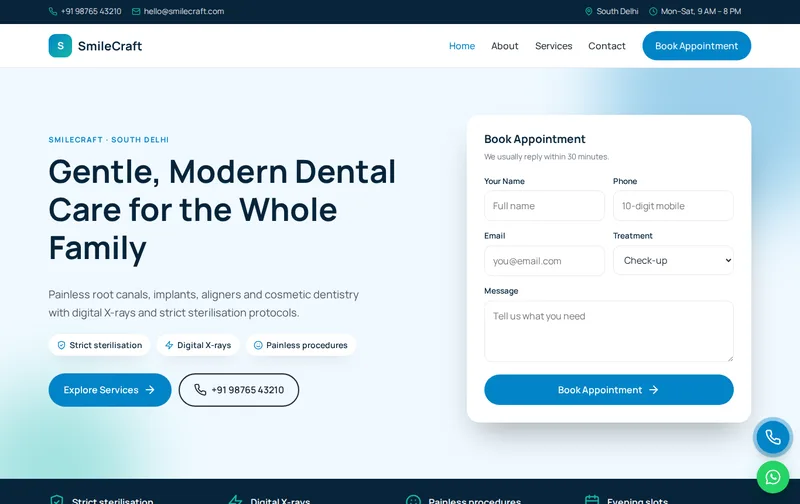
A static site can still do useful things. A contact form can send enquiries to your email using a small script, such as a PHP mail handler. Click-to-call and WhatsApp buttons, Google Maps embeds, image galleries and FAQ sections all work without a database.
What is a dynamic website?
A dynamic website builds pages on request, usually by pulling content from a database. WordPress, Shopify, and most custom web applications are dynamic. They normally come with an admin panel where you can log in, write a new page, upload products or change prices without touching code.
That convenience has a cost. There is more software on the server, such as a CMS, plugins, a database and a programming language runtime, and all of it needs updates. Dynamic sites usually need more powerful hosting, and they give attackers more to target if they are not maintained.
Side-by-side comparison
- Speed: static pages are served as finished files, so they are typically very fast. Dynamic pages can be fast too, but usually need caching and tuning to get there.
- Security: a static site has no database or login page to attack. Outdated plugins and weak admin passwords are common ways dynamic small-business sites get hacked.
- Hosting: a static site runs on the most basic shared hosting plan. A dynamic site needs a plan that supports its CMS and database, and may need more resources as traffic grows.
- Editing: on a static site, you edit text in the HTML files or ask someone to. On a dynamic site, you edit through an admin panel.
- Maintenance: a static site needs almost none beyond domain and hosting renewals. A dynamic site needs regular core, theme and plugin updates, plus backups.
- Features: dynamic sites can do far more: blogs with categories, product catalogues, bookings, payments, member areas and search.
Static vs dynamic website price
Price differences come from three places: the build, the hosting and the upkeep.
Build. A static site built from a ready-made template is the cheapest route. On Web Template Hub, niche templates for Indian local businesses cost between ₹799 and ₹1,499, and several are free. If you want it set up for you, our partner agency starts template setups at ₹4,999. Dynamic sites cost more to build because someone has to configure the CMS, theme and plugins, or write the application. Our partner's custom websites start at ₹14,999, and online stores or web applications are quoted separately.
Hosting. Both can run on shared hosting at the small end, but a static site will never push you towards a more expensive plan, while a growing dynamic site might.
Upkeep. This is the cost most people forget. A dynamic site needs someone to apply updates and fix things when an update breaks something. If you pay a developer for that, it becomes a recurring cost. A static site rarely needs anything beyond small content edits.
For a full breakdown of domain, hosting and build costs, see our guide on how much a website costs in India.
When a static website is the right choice
- Your services and prices change a few times a year, not every week.
- Customers contact you by phone, WhatsApp or an enquiry form.
- You want a fast, low-maintenance site that you do not have to keep updating.
- You are a new business and want to get online quickly and cheaply.
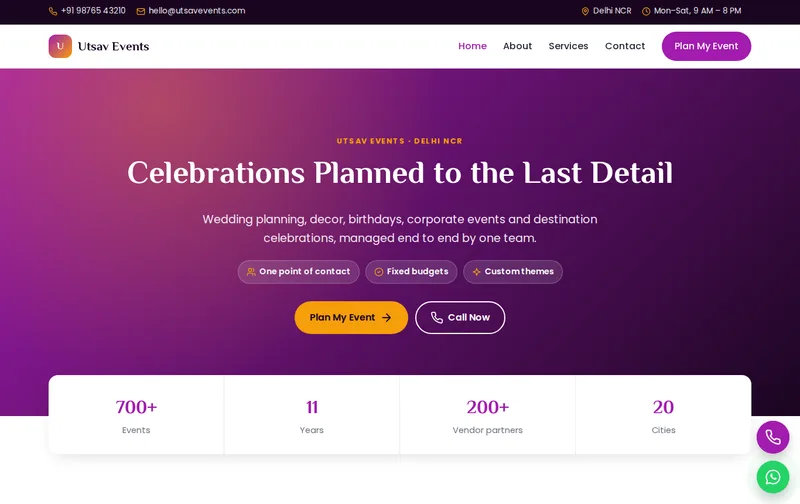
This describes most clinics, coaching institutes, caterers, travel operators, consultants and home-service businesses. For example, a coaching institute website or a plumber website needs clear services, real photos and an easy way to call, not a database.
When you need a dynamic website
- You publish news, notices or articles several times a week.
- You list many items that change often, such as properties, cars or products.
- Customers need to book slots, pay online or log in to an account.
- Several staff members need to update the site without technical help.
In these cases the extra cost and maintenance are justified, because the site does work a static site cannot do.
A middle path many businesses use
You do not have to choose one model for everything. Many businesses keep a fast static website for their main pages and use specialised tools for the dynamic parts: a booking app for appointments, a payment link for advance payments, a listing on a delivery or property portal, and a Google Business Profile for reviews and updates. The website links to each of them. This keeps the main site cheap and secure while still giving customers the features they need.
Questions to ask before you decide
- How often will the content really change, and who will change it?
- Do customers need to do anything on the site other than read and contact you?
- Who will apply updates and take backups if the site is dynamic, and what will that cost each year?
- Can the feature you want be added later with a separate tool instead?
Frequently asked questions
Is a static website bad for SEO?
No. Search engines rank pages, not technologies. A static site with useful content, correct titles, structured data and fast loading can rank as well as a dynamic one. What matters is the content and how well it answers searchers' questions.
Can I add a blog to a static website later?
Yes. You can add new HTML pages by hand, or move to a dynamic setup when you start publishing often.
Is WordPress static or dynamic?
WordPress is dynamic. Pages are built from a database, which is why it needs regular updates and security care.
Can a static website have a contact form?
Yes. A small server script or a form service can send submissions to your email. All Web Template Hub templates include a PHP contact form handler.
Summary
Choose a static website when your site's job is to inform and generate enquiries; it costs less to build, host and maintain. Choose a dynamic website when you genuinely need frequent publishing, listings, bookings, payments or logins. If you are unsure, start static: it is easier to add a dynamic tool later than to maintain one you never needed. Browse our website templates for Indian businesses to see what a static site for your industry looks like.